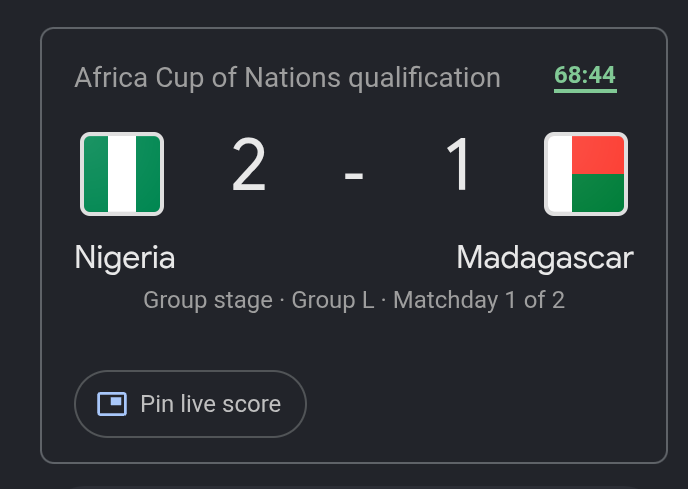
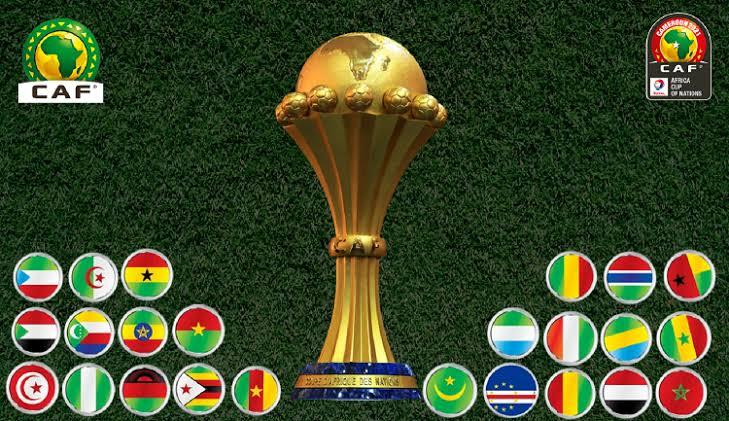
That is the day the qualifiers for the 2027 Africa Cup of Nations begin. Forty-eight nations. Twelve groups. Twenty-four tickets to Kenya, Uganda, and Tanzania. And for a continent still arguing about who actually won the last one, the timing could not be sharper.
This is the first AFCON to be co-hosted by three East African nations. They have branded it Pamoja, the Swahili word for together. The finals open on June 19, 2027. Everything between now and then runs through six matchdays, and the first two of them arrive in three weeks.
The dates you need
CAF has confirmed the shape of the campaign. Matchdays 1 and 2 fall inside the September international window, between September 21 and October 6, 2026. CAF has pencilled Matchday 1 for September 23 to 25, with Matchday 2 following on September 27 to 29. Matchdays 3 and 4 come in the November window, from November 9 to 17. The campaign closes with Matchdays 5 and 6 from March 22 to 30, 2027, barely eleven weeks before the opening whistle in East Africa.
The draw was made in Cairo on May 19. Twelve groups, labelled A to L, playing home and away round robin.
The rule nobody has explained properly
Here is where most fans get lost, so read this twice. The top two teams in each group qualify. That is the simple version.
The complication sits in Groups D, H, and L. Those three groups contain the co-hosts. Kenya, Uganda and Tanzania are already at the tournament by right, so their results in qualifying do not decide their fate. In those three groups, only the highest-placed team apart from the host advances.
Translated into plain language: if you are drawn alongside a co-host, second place is not good enough. You either finish above every other non-host in your group, or you go home. Three groups on this continent are playing a knockout tournament disguised as a league.
Group C is the fixture of the window
Ghana versus Ivory Coast, September 23. Nothing else on the calendar comes close. The Elephants are continental champions and are coming off the best World Cup campaign in their history, having reached the knockout phase for the first time before falling to Norway. The Black Stars arrive from North America with a run of their own and with a wound that has not healed. Ghana missed the last AFCON in Morocco altogether. For a nation of four continental titles, that absence still stings.
Group C also holds The Gambia, who have made a habit of embarrassing the giants, and Somalia, who came through the preliminary round on penalties against Mauritius. Two teams go through. On paper, that is Ivory Coast and Ghana. On paper is where West African football goes to die.
There is a subplot. Ivory Coast will line up under Hervé Renard, appointed after Emerse Faé's contract was allowed to expire on July 31. Ghana, three weeks out, still has no substantive head coach. One team is starting a new project with a proven winner. The other is starting a new project with a shortlist.
The other groups worth watching
Group A. Morocco, Gabon, Niger and Lesotho. The Atlas Lions reached the World Cup quarter finals under Mohamed Ouahbi before losing to France, and they arrive in this window carrying the continent's heaviest expectations and its loudest controversy.
Group B. Egypt, Angola, Malawi and South Sudan. Malawi are not the same side that walked into this draw. Their women's team reached a WAFCON final this August, and belief travels across a federation faster than any coaching manual.
Group D. South Africa and Guinea, in one of the three groups shadowed by a co-host. Bafana Bafana open against Guinea and Eritrea in September, and they do it with a national team that just reached a World Cup knockout round for the first time in its history, under a coach who was still being negotiated with days before camp.
Group J. Senegal, Mozambique, Sudan and Ethiopia. The Lions of Teranga should stroll this. Whether they can concentrate on it is another question entirely, with the fate of their stripped continental title still sitting in front of the Court of Arbitration for Sport.
What is really being decided in September
Two matchdays out of six will not settle qualification. They will settle something else. They will tell us which federations used the post World Cup summer well and which spent it arguing over salaries. They will tell us whether Ivory Coast's dominance was Faé or the squad. They will tell us whether Ghana's rebuild has a plan or only a press release. And they will tell us how much authority CAF still carries into a stadium, three weeks after a title reassignment that half the continent refuses to accept.
Six points are available. In a twelve-group format where three groups punish second place, six points in September is close to half a qualification.
Why it matters to us
For the diaspora, this window is not abstract. It is the first competitive African football since the World Cup ended, and it lands in a season when many of us are settling back into work, school runs and the long grind of a northern autumn.
The kickoffs will be inconvenient. Most Matchday 1 fixtures will land in the early afternoon in Calgary, Toronto and Edmonton, in the middle of a working Wednesday. Watch parties will be arranged around shift schedules. WhatsApp groups that went quiet after July will light up again by the weekend.
That is the real function of a qualifying window for people living far from home. It is a reason to gather. It is a reason to call your uncle in Kumasi or your cousin in Abidjan and argue about a left back. It is proof that the connection did not end when the World Cup did.
Africa is back on September 21. Clear your afternoon.

Leave a comment
Your email address will not be published. Required fields are marked *