
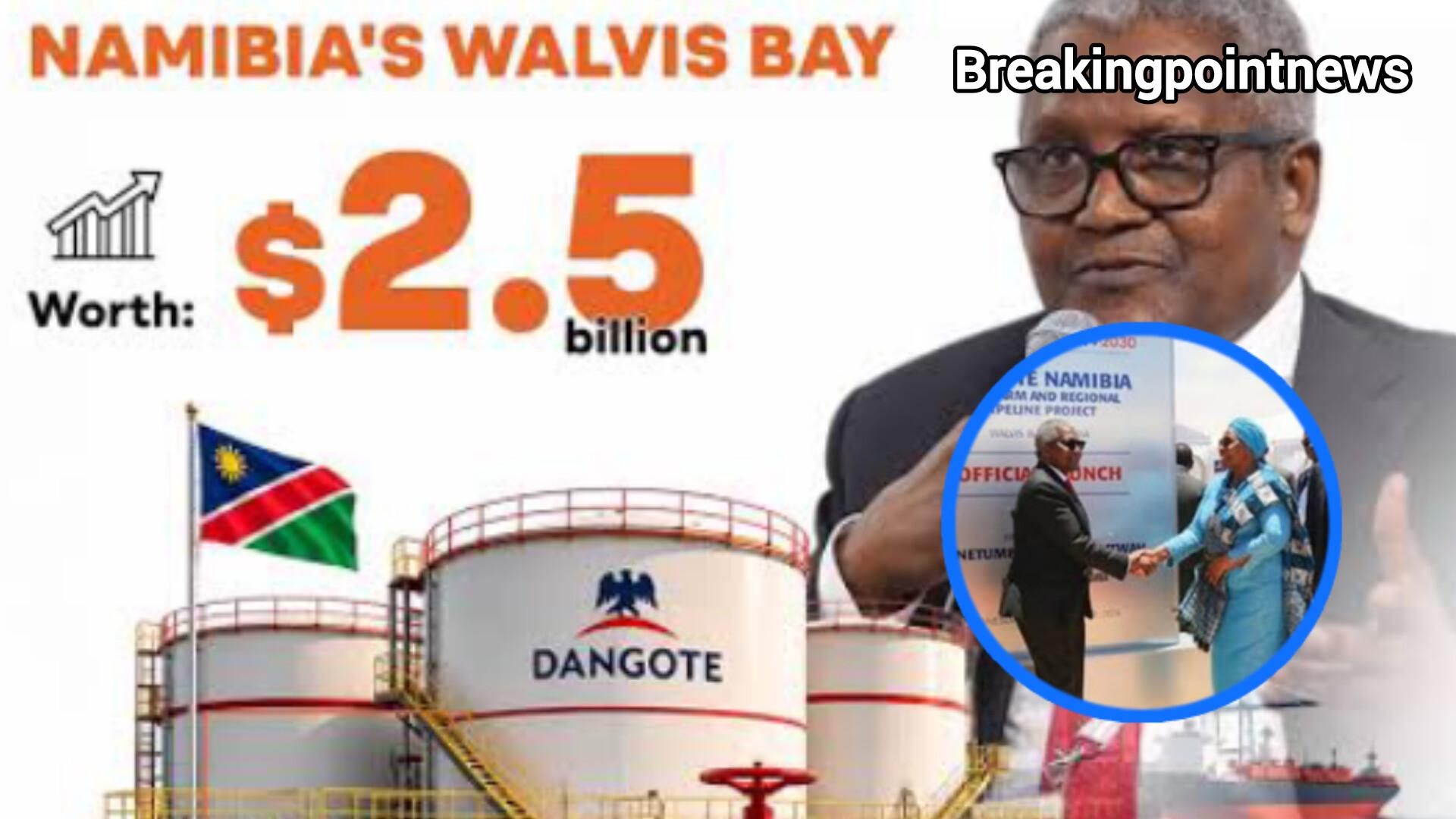
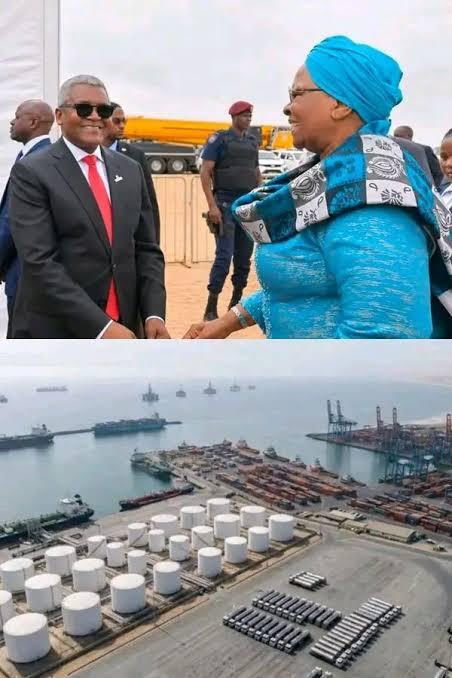
On 4 November, Namibian President Netumbo Nandi-Ndaitwah and Dangote Group Chairman Aliko Dangote jointly inaugurated the "Dangote Namibia Oil Terminal and Regional Pipeline Project" at Farm 58, about 10km east of Walvis Bay. Total investment is approximately $2.5 billion.
The centrepiece is a planned 600 million-litre storage facility 360 million litres for diesel and 240 million for petrol. That is eight times the size of Namibian state oil company Namcor's existing 75 million-litre national storage facility.
Supporting infrastructure includes a 16km dedicated pipeline connecting the terminal directly to Walvis Bay's fuel jetty, allowing imported refined products to be pumped straight from tankers into storage tanks. Dangote said at the ceremony that the storage facility is expected to be completed within 18 to 20 months.
The more ambitious vision is a regional pipeline network. The planned route runs roughly 1,700km from Walvis Bay through Otjiwarongo north to Rundu, and east to Ghanzi and Francistown in Botswana. The eventual distribution footprint covers Botswana, Zambia, Zimbabwe, Malawi and southern Democratic Republic of Congo.
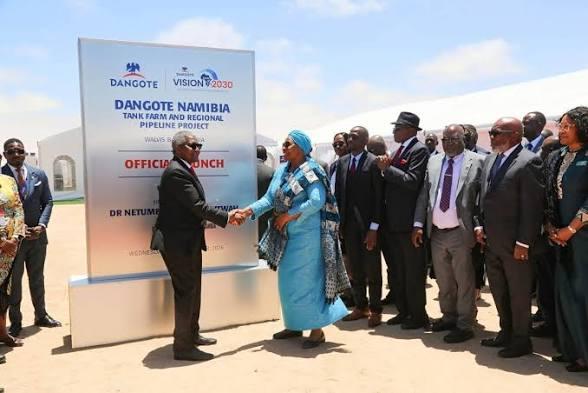
Dangote was blunt about the economics: "We want to invest heavily so that most landlocked countries can access petroleum products at cheaper prices." For countries without sea access, fuel has long relied on road transport from coastal ports costly and inefficient. Once built, the pipeline would offer an alternative, lower-cost supply corridor.
The project is a key step in Dangote Group's expansion from refining into storage and distribution. Dangote operates Africa's largest refinery in Lagos, with capacity of about 650,000 barrels per day, and plans to expand to 1.4 million bpd. The Walvis Bay hub is positioned to open southern Africa's landlocked markets to refined products from that refinery.
President Nandi-Ndaitwah placed the project directly under the supervision of the presidency, saying "until the project is completed, it will remain a presidential project," and called for priority hiring of Namibians.
It should be noted, however, that the 4 November event marked the launch rather than the start of substantive construction. Dangote Industrial Namibia has so far only submitted an environmental clearance application for the subdivision of about 68 hectares at Farm 58; construction of the storage facility will still require separate environmental impact assessments and approvals. The final route and length of the cross-border pipeline will also depend on detailed engineering studies and regulatory approval from each country. Namibia's opposition has previously raised concerns that a regional pipeline could hit the country's trucking and logistics sector.
Still, for a region long dependent on imported fuel and currently facing price pressure from rising global shipping costs the $2.5 billion project at least offers an answer worth waiting for.

Leave a comment
Your email address will not be published. Required fields are marked *