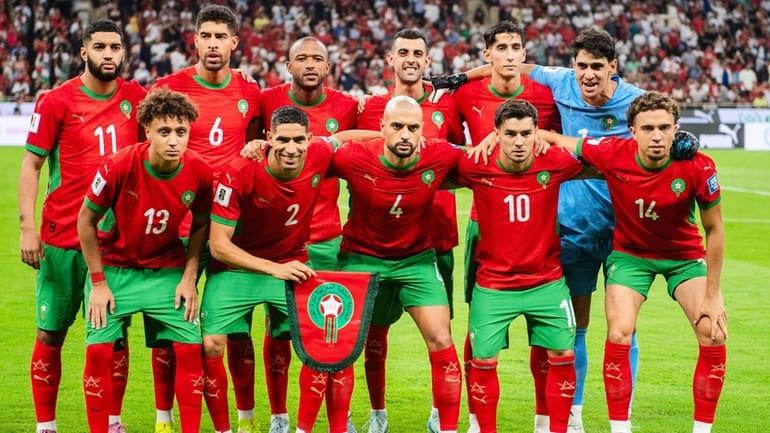
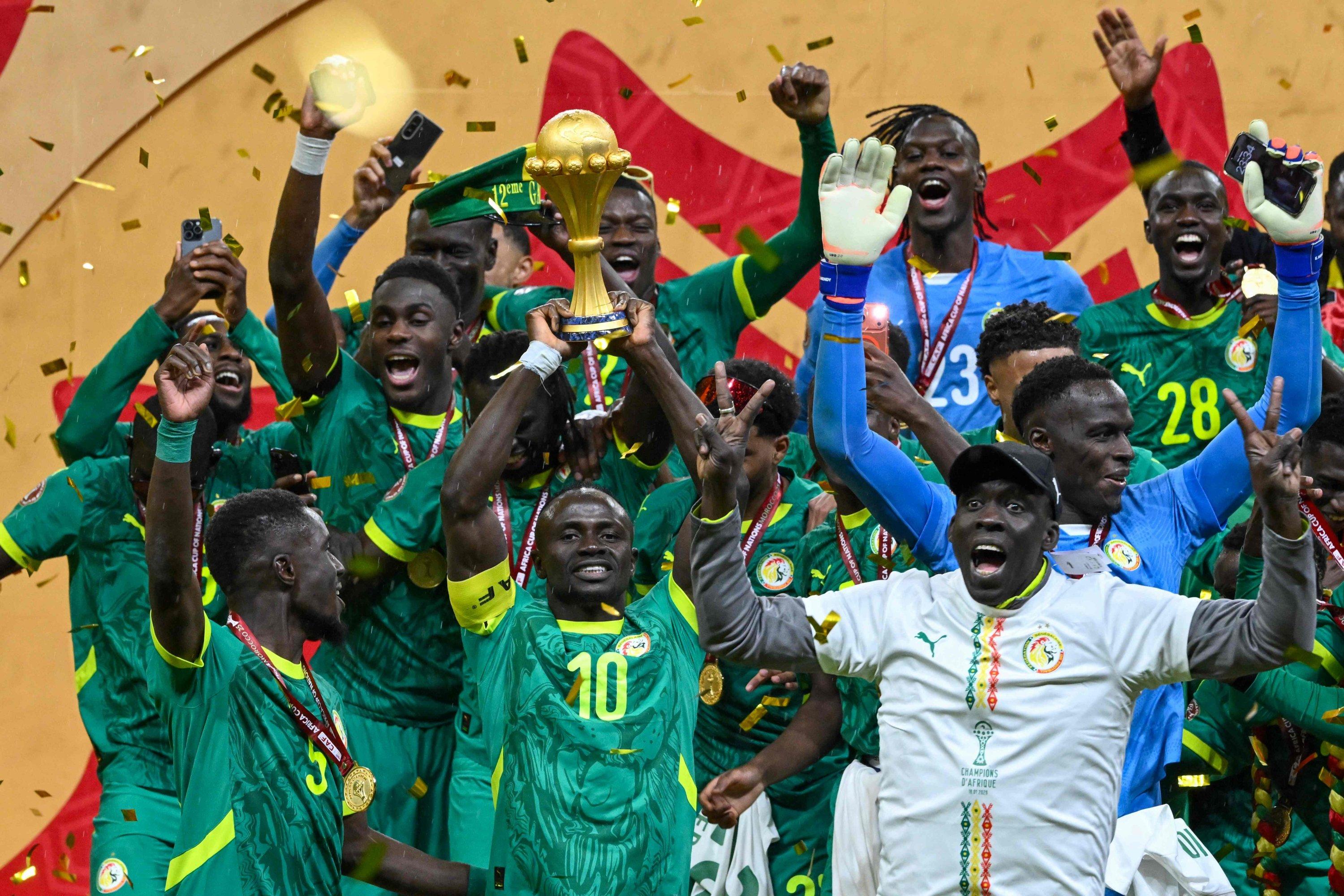
Senegal beat Morocco 1-0 in the AFCON final on January 18. Senegal have a trophy. Senegal have paraded that trophy. Senegal's players have posed in shirts with two stars above the badge.
Officially, Morocco are the champions of Africa. That contradiction has now stood for seven months, and the Court of Arbitration for Sport verdict that is supposed to resolve it is, by the estimate of the man who used to run CAF's disciplinary board, already due. Here is where the most extraordinary title dispute in African football history actually stands.
What happened in Rabat
The final at the Prince Moulay Abdallah Stadium drew 68,000 spectators and millions more watching worldwide. It was goalless deep into stoppage time when the referee awarded Morocco a hotly contested penalty.
Senegal's response changed everything. Coach Pape Bouna Thiaw led his players off the pitch in protest, and the match was halted for somewhere between 14 and 17 minutes depending on the count. Sadio Mané emerged as the figure who talked his teammates into returning. When play resumed, Brahim Diaz took the penalty, attempted a panenka, and saw it comfortably saved. The match went to extra time, where Pape Gueye scored the 94th-minute winner that made Senegal champions of Africa for the second time. Fireworks. Champagne. A national celebration that ran deep into the night.
Two months later, CAF took it all back
At an initial disciplinary hearing, CAF imposed more than $1 million in fines plus bans on players and officials from both sides, but left the result standing. Then, on March 17, CAF's Appeal Board upheld an appeal from the Royal Moroccan Football Federation and ruled that Senegal had forfeited the final. The 1-0 win was annulled and officially recorded as a 3-0 default victory for Morocco.
The legal basis is Article 82 of the AFCON regulations, which states that a team refusing to play or leaving the ground before the end of regulation time without the referee's authorisation shall be considered the loser and eliminated. Article 84 sets the penalty: permanent elimination and a 3-0 loss.
Morocco's federation welcomed the ruling, saying it reaffirmed the primacy of competition regulations and strengthened the conditions needed for tournaments to be run properly.
Senegal's response
The Senegalese Football Federation called the decision unfair, unprecedented, and unacceptable, and said it cast a shadow over African football. Federation secretary general Abdoulaye Seydou Sow was blunter on national broadcaster RTS: they would not back down, and the law was on their side.
The Senegalese government went further, calling for an international investigation into suspected corruption within CAF. The players didn't hide their feelings either. Defender Moussa Niakhaté posted an image of himself holding the trophy captioned with an invitation for CAF to come and get it. Left back El Hadj Malick Diouf said the trophy wasn't going anywhere. In late March, Senegal paraded the AFCON trophy in front of thousands of fans regardless of the ruling, and the federation's Instagram posted a video of Iliman Ndiaye modelling a shirt with two stars above the badge, captioned with nothing but two star emojis.
Liberian former president and Ballon d'Or winner George Weah condemned the decision, warning it had scarred and blemished African football and damaged the continent's reputation.
Why many expect Senegal to win at CAS
CAS confirmed receipt of Senegal's appeal on March 25. The federation is asking the court to set aside the CAF decision and declare Senegal the winners.
Raymond Hack,a CAS arbitrator, former CAF Disciplinary Board chairman, former SAFA chief executive, and former FIFA Disciplinary Committee member, said publicly that he expects the court to rule in Senegal's favour. His central argument is jurisdictional: the referee is the only person with the authority to declare a match abandoned, and the referee restarted this one and saw it through to a result. Hack also noted that until CAS issues a verdict, Senegal do not have to surrender their medals or prize money.
There is precedent, and it doesn't favour CAF. In 2019, Wydad Casablanca walked off in the second leg of the CAF Champions League final protesting VAR. The referee declared Esperance winners. CAF's executive committee then ordered a replay. Esperance went to CAS, were declared champions, and CAF was rebuked for attempting to override the referee's decision.
The clock
Hack told BBC World Service in March that the arbitration could take as long as six months. That window closed in September territory — meaning a verdict is now, on the most commonly cited timeline, either imminent or overdue. CAS Director General Matthieu Reeb acknowledged that teams and fans want a decision and said proceedings would move as swiftly as possible while respecting every party's right to a fair hearing, but the court set no formal timetable. Senegal's lawyers pushed for an expedited procedure; other estimates put a full CAS process closer to a year. Both teams have already played a World Cup with the question unresolved.
The collateral damage
The fallout has reshaped African football's leadership. Morocco coach Walid Regragui — the man who took an African side to a World Cup semi-final for the first time in 2022 — left his post weeks after the final following criticism for not winning AFCON, saying the team needed a new lease of life before the World Cup. Bafana Bafana coach Hugo Broos departed after five years. Ivorian Football Federation head coach Emerse Faé left when his contract expired on July 31.
Most significantly, CAF general secretary Veron Mosengo-Omba resigned on March 29 after repeated calls for his removal. He said he was retiring to pursue personal projects, but his exit came amid a crisis of confidence in CAF's leadership, calls for a corruption investigation, and criticism that at 66 he was well past CAF's mandatory retirement age of 63. A former FIFA employee and university friend of Gianni Infantino, he was replaced on an interim basis by CAF competitions director Samson Adamu. CAF president Patrice Motsepe had already acknowledged that the organisation was struggling with questions over its integrity.
A Moroccan court also sentenced 19 fans to up to a year in prison for hooliganism connected to the final, after supporters attempted to storm the field.
What's actually at stake
More than a trophy. If CAS upholds CAF's ruling, it establishes that a continental championship can be reassigned by an appeals panel months after a referee signed off on the result. Senegal's federation captured the anxiety directly: if this is allowed to stand, the winner of a future World Cup could effectively be decided in a law firm.
If CAS overturns it, CAF will have spent an entire year defending a decision that stripped a title from the team that won it on the pitch, cost its general secretary his job, triggered government-level corruption allegations, and left African football's flagship tournament with a disputed champion — all over a fifteen-minute protest that ended with the penalty being missed anyway.
Either way, the damage is done. Africa has been waiting since January to find out who its champions are, and the answer still isn't in.

Leave a comment
Your email address will not be published. Required fields are marked *