
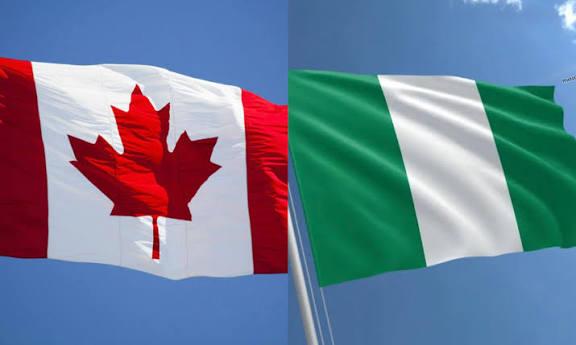
Every person reading this who sends money home has had the same conversation. Someone in the family needs school fees, or a hospital bill has arrived, or it is simply the end of the month and the responsibility does not go away because you moved. You open an app, you type in an amount, and a big cheerful banner tells you there is no fee. There is always a fee. It is just not in the place you are looking.
Where the money actually goes
A transfer costs you in two ways, and companies have learned that people only check one of them. The first is the upfront fee, the number in the box. Many providers have driven this to zero because it is the number that appears in advertising and the number you compare.
The second is the exchange rate margin, which is the difference between the real rate at which currencies trade and the rate you are given. This is where the money is made. Comparison services estimate that a Canadian bank will typically take somewhere in the range of three to five percent on the rate before adding its own fees on top.
On a thousand-dollar transfer, a four percent margin is forty dollars. Nobody would pay a forty-dollar fee. Thousands of people pay it every day without noticing, because it never appears as a fee.
The two-minute check
You do not need a comparison website to work this out. You need thirty seconds and a calculator.
Step one. Find the real rate. Search the currency pair, for example CAD to NGN or CAD to GHS, and look for the mid market rate. That is the genuine rate at which the currencies trade, and it is what you should be measuring against. Several currency sites publish it free.
Step two. Multiply the amount you want to send by that rate. That is the theoretical maximum your family could receive.
Step three. Open your app and look at the amount it says will arrive.
Step four. Subtract the second number from the first, then divide by the amount you are sending.
That percentage is what the transfer costs you. Not the fee. The whole thing.
Do it once with the service you always use. Most people are surprised, and a meaningful number of people are angry.
What a reasonable cost looks like
This is worth knowing, because without a benchmark a number is just a number. The World Bank tracks the cost of remittances across hundreds of country corridors. Its most recent published figures put the average cost of sending money from G8 countries at 5.40 percent in the third quarter of 2025, down from 5.99 percent at the start of that year and from 6.14 percent a year earlier.
The United Nations target, adopted as part of the Sustainable Development Goals, is to get the global average below three percent.
Some sending countries are far worse. South Africa was recorded at 15.65 percent in the third quarter of 2025, the most expensive sender in the G20, with Brazil second at 11.91 percent. Japan's cost rose sharply over the same period, from 7.11 percent to 9.98 percent.
So here is your rough benchmark. Under two percent is a good deal. Around five percent is average and you can do better. Anything approaching ten percent means you are using the wrong service or the wrong delivery method.
Five things that quietly raise your cost
Cash pickup. Sending to a bank account or a mobile wallet is almost always cheaper than sending cash to be collected at a counter. Cash costs money to handle and someone pays for it.
Small, frequent transfers. Where a fixed fee exists, it hurts small amounts most. A five dollar fee on two hundred dollars is two and a half percent before the rate margin even starts. Four transfers of two hundred dollars cost far more than one of eight hundred.
Promotional rates. First transfer offers are real, and they are also temporary. The rate you got in month one is often not the rate you are getting in month six. Recheck your usual provider every few months rather than assuming loyalty is being rewarded.
Weekend transfers. Currency markets close. Some providers widen their margins to cover the risk of holding your money over a weekend.
Card funding. Paying by credit card can add a cash advance charge from your own bank, entirely separate from the transfer. Bank debit or e-transfer funding usually avoids it.
Not all corridors are equal.
This is the part that frustrates people from smaller countries, and it is worth saying openly.
Nigeria has one of the most competitive corridors in the world from Canada, because the market is large enough to support a crowd of specialist operators competing on price. Ghana is reasonably well served. So, increasingly, are Kenya and much of East Africa, where mobile money has forced costs down.
Francophone West Africa is generally harder. Corridors into the CFA franc zone have historically had fewer digital operators and more reliance on cash agents, and where competition is thinner, costs are higher. Smaller markets across the continent face the same problem. The World Bank has repeatedly flagged that the most expensive corridors in the world are concentrated in and around sub Saharan Africa, with costs above seven percent in several countries.
If you are sending to a smaller market and you have been told there is only one realistic option, check again anyway. The number of operators serving these corridors has grown quickly in the last few years.
Before you send, check two boxes
Is the company registered? Any money services business operating legally in Canada must be registered with FINTRAC, and the registry is public and searchable. It takes a minute. A service that is not registered is not a bargain; it is a risk.
Can the recipient actually collect it? Delivery failures usually come down to a name mismatch between the transfer and the bank account or a recipient without the identification required at a pickup point. Confirm the exact spelling of the name as it appears on the account before you send, not afterwards.
And one warning that never stops being necessary. If somebody you have not met in person is asking you to send money by cash pickup, urgently, with a reason that does not quite fit, stop. Cash pickup is untraceable once collected, and that is precisely why it is the preferred method of every remittance scam ever run against our community.
Why this matters more than it sounds
Nigeria alone received an estimated 19.5 billion dollars in remittances in 2023, roughly 35 percent of everything sent to sub-Saharan Africa that year, according to World Bank figures.
Now apply the arithmetic. The difference between the current G8 average of around five percent and the United Nations target of three percent is two percentage points. On tens of billions of dollars, that gap is measured in billions, and every dollar of it comes out of a household budget somewhere, sent by somebody working a shift in Calgary or Brampton or Surrey to pay for something that cannot wait.
This is not a personal finance tip. It is the largest single financial flow between our diaspora and our families, and most of us have never checked what we are being charged for it.
Take the two minutes. Do the calculation once.
COMPARISON TABLE TEMPLATE
Build this yourself on publication morning. Send a test quote of 500 CAD to each provider, at the same time of day, to a bank account, and record what the app tells you before you confirm. Date-stamp it.
| Provider | Fee on CAD 500 | Rate offered | Amount received | Mid market equivalent | True cost % | Speed |
|---|---|---|---|---|---|---|
Rules for the table. Same amount, same delivery method, same hour, every provider. Note that the figures are a snapshot and will change. Refresh monthly, and put the refresh date at the top where readers can see it. If you cannot commit to refreshing it, publish the method without the table.

Leave a comment
Your email address will not be published. Required fields are marked *