
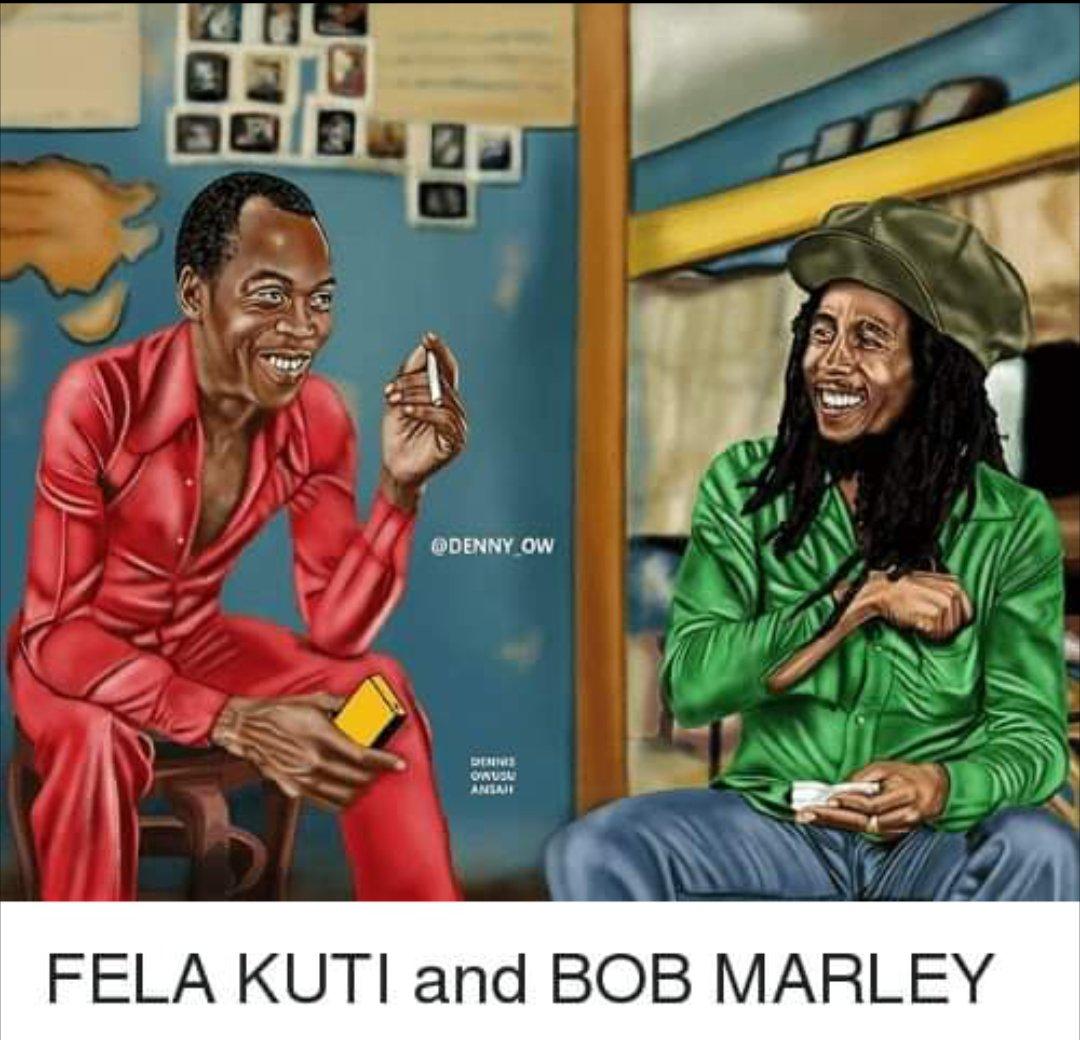
Though born on opposite sides of the Atlantic, Fela Anikulapo Kuti and Bob Marley shared something rare: they turned music into a weapon against oppression. Both men reshaped global sound, challenged unjust systems, and became symbols of resistance for Black people worldwide. Yet while their missions overlapped, their movements through music took strikingly different paths.
🎶 Music as a Weapon, Not Just Art
Neither Fela nor Marley believed music was neutral.
- Fela used Afrobeat to confront African military dictators, colonial mentality, and state violence head-on.
- Marley used reggae to promote liberation, unity, and spiritual resistance against oppression rooted in colonialism and inequality.
For both men, music was not entertainment first — it was purpose.
✊ Shared Similarities That Made Them Icons
Despite their differences, Fela and Marley shared core traits that made them revolutionary:
- Political courage: Both openly criticised power structures at great personal risk.
- Cultural pride: Each rejected Western superiority and celebrated African identity.
- Global impact: Their music crossed borders and became the voice of the oppressed worldwide.
- Personal sacrifice: Harassment, exile, threats, imprisonment, and poor health followed both men.
They weren’t rebels by branding—they lived their resistance.
🔥 Fela Kuti: Confrontation and Chaos
Fela’s revolution was loud, direct, and confrontational.
He named names. He mocked generals. He attacked police and politicians openly. His songs were long, aggressive, and uncompromising. Fela believed shame was a political tool — and he used it ruthlessly.
His movement revolved around:
- Afrobeat as protest
- Direct confrontation with the state
- Physical resistance and civil disobedience
- Radical African self-determination
Fela paid dearly for this approach—repeated arrests, beatings, the destruction of his commune, and the death of his mother after a military raid. Yet he never softened his message.
🕊️ Bob Marley: Spiritual Resistance and Unity
Bob Marley’s movement was spiritual, unifying, and global.
Rather than naming politicians, Marley spoke in universal truths—freedom, justice, peace, and liberation. His music carried political meaning wrapped in spirituality, Rastafarian philosophy, and hope.
Marley’s movement centred on:
- Reggae as consciousness-raising
- Spiritual awakening
- Pan-African unity
- Non-violent resistance
Where Fela confronted power directly, Marley transcended it, reaching people across race, religion, and nationality.
⚖️ Two Paths, One Destination
| Fela Kuti | Bob Marley |
|---|---|
| Aggressive, confrontational | Calm, spiritual resistance |
| Named corrupt leaders | Spoke in universal messages |
| Afrobeat | Reggae |
| Local struggle, global cult | Global movement |
| State enemy | Global peace symbol |
Fela shook governments. Marley softened hearts.
One used fire. The other used faith.
🌍 Why Their Differences Mattered
Their contrasting approaches reveal a deeper truth:
There is no single way to fight oppression.
- Fela believed systems must be exposed and embarrassed.
- Marley believed minds must be awakened and united.
Both methods worked differently.
Fela’s impact is felt in African political consciousness and protest music. Marley’s legacy lives in global liberation movements and spiritual resistance.
🕯️ Two Immortals, One Legacy
Fela Kuti and Bob Marley didn’t just change music—they changed how music could be used.
One challenged power from the streets of Lagos. The other spread hope from the hills of Jamaica.
Different styles. Different movements. Same mission: freedom.
And decades later, the world is still listening.

Leave a comment
Your email address will not be published. Required fields are marked *