
The history of Pan-Africanism and the spread of Christianity across Africa is one of contradictions, collaborations, tensions, and shared aspirations. These two forces have shaped the cultural, political, and spiritual contours of the African continent and its diaspora — sometimes in harmony, sometimes in conflict.
Pan-Africanism: A Brief Primer
Pan-Africanism emerged in the late 19th and early 20th centuries as an ideological and political movement aimed at uniting African people — on the continent and in the diaspora — against colonial oppression, racial discrimination, and economic exploitation. Leaders such as W.E.B. Du Bois, Marcus Garvey, Kwame Nkrumah, and Amílcar Cabral envisioned a world in which people of African descent could reclaim both political autonomy and cultural dignity.
At its core, Pan-Africanism seeks empowerment, self-determination, and unity. It draws strength from the shared experience of displacement and subjugation under slavery, colonialism, and segregation.
Christianity’s Arrival and Expansion in Africa
Christianity arrived in Africa in multiple waves. Some of the earliest Christian communities existed in North Africa (e.g., Alexandria and Carthage) in the early centuries of the Common Era. However, the religion’s more widespread penetration across Sub-Saharan Africa came through European missionary efforts during the 19th and 20th centuries — often tied to colonial administrations.
Missionaries brought education, healthcare, and literacy. They translated the Bible into local languages and established schools and hospitals that would have a lasting societal impact.
Yet, Christianity was also a tool of cultural transformation — one that frequently displaced indigenous belief systems and became entangled with colonial power structures.
Points of Tension
The intersection of Pan-Africanism and Christianity is not uniformly cooperative. Key areas of tension include:
1. Colonial Legacy
Christian missions often arrived with or preceded colonial powers. In many regions, the church was associated with imperial domination. For Pan-Africanists seeking to dismantle colonial structures, Christianity was sometimes viewed with suspicion as a “religion of the colonizer.” This perspective was articulated by thinkers who argued that liberation must encompass both spiritual and political emancipation.
2. Cultural Erasure
Many Christian missions discouraged and even actively suppressed indigenous spiritual practices. Traditional religions, languages, and cultural rituals were labelled “pagan” or backward—fueling a narrative that African cultures needed to be redeemed through Western religion.
This created a dilemma for Pan-Africanists: how to reclaim African heritage while remaining faithful to spiritual practices that millions had already embraced.
3. Race and Theology
Theological interpretations that justified racial hierarchies—such as teachings rooted in the so-called “curse of Ham”—were used historically to rationalize slavery and segregation. These interpretations were later challenged by Pan-Africanists and Black theologians, who argued that such readings were distortions used to legitimize oppression.
Points of Synthesis
Despite tensions, there are profound areas where Pan-Africanism and Christianity have converged:
1. Christian Leaders in Independence Movements
Across Africa and the diaspora, many Christian leaders became central voices in the struggle for independence and civil rights. Figures such as Martin Luther King Jr. in the United States and Desmond Tutu in South Africa used the moral language of Christianity to advocate for justice, equality, and human dignity — principles core to Pan-African thought.
2. Liberation Theology
Emerging in the 20th century, liberation theology offered a framework that fused Christian teachings with social justice activism. African and Afro-Diasporic theologians reframed Christian doctrine as a force for resistance against exploitation and inequality, rather than submission to authority.
3. Community and Identity Building
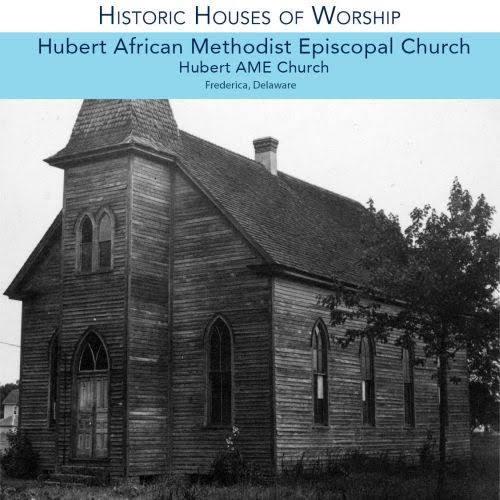
Christianity—like Pan-Africanism—has played a role in strengthening collective identity among African peoples. Churches often became hubs for organizing, education, and community support. In many contexts, Christian social networks facilitated transnational connections that advanced Pan-African solidarity.
Contemporary Dynamics
In the 21st century, the relationship between Pan-Africanism and Christianity continues to evolve:
- African Independent Churches and Pentecostal movements have grown rapidly, often blending Christian belief with indigenous cultural expressions.
- Many African theologians and church leaders are reclaiming Christianity from colonial narratives and interpreting it through African worldviews.
- In the diaspora, debates about identity continue to wrestle with how Christianity can affirm Black dignity without replaying historic injustices.
Conclusion: A Relationship Neither Monolithic Nor Static
The interaction between Pan-Africanism and Christianity cannot be reduced to simple opposition or uncomplicated alliance. It is a living, contested, and transformative relationship—shaped by history, power, culture, and faith.
For a movement rooted in liberation and a religion that has been both a medieval tool and a modern liberator, the dialogue between Pan-African thought and Christian faith remains central to understanding the past, present, and possible futures of African peoples worldwide.

Leave a comment
Your email address will not be published. Required fields are marked *