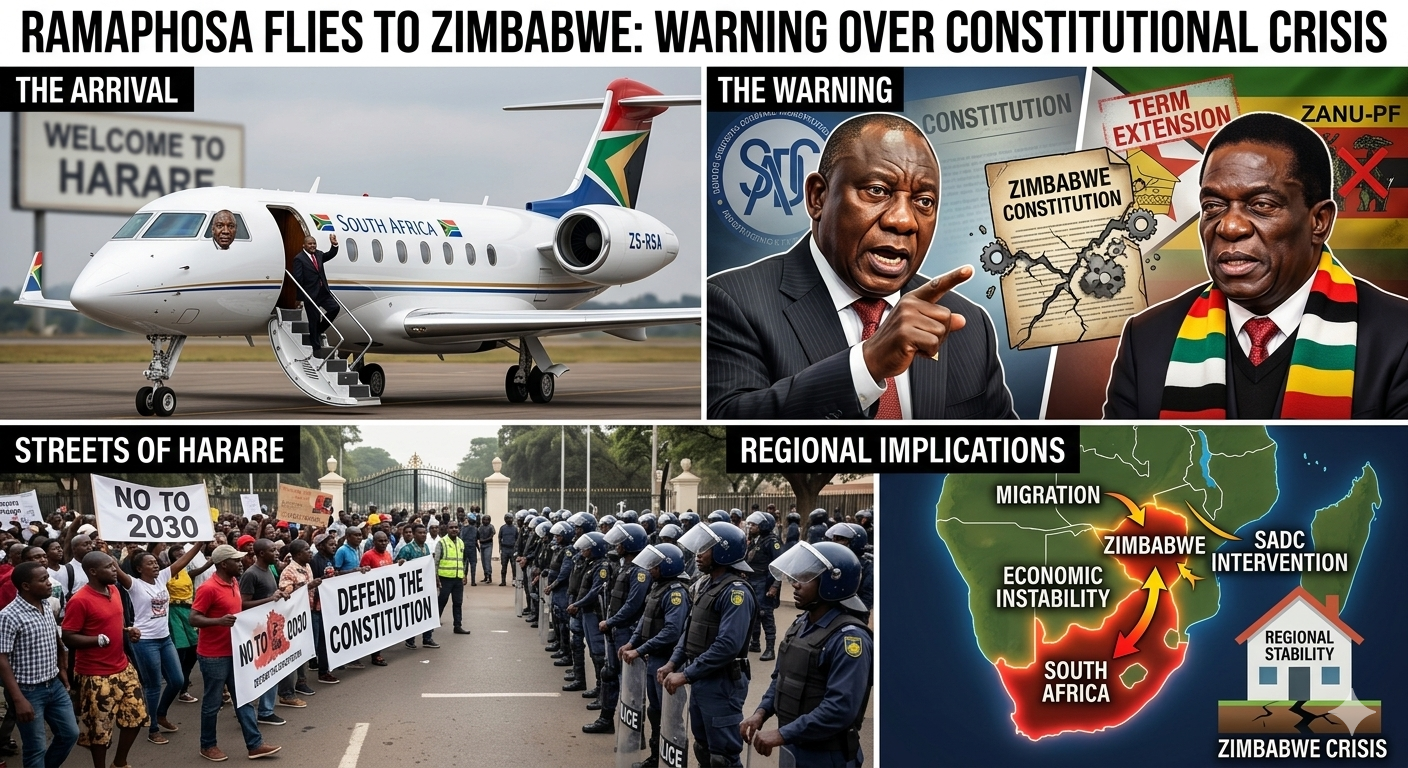
South African President Cyril Ramaphosa made an unannounced trip to Zimbabwe this week to privately meet President Emmerson Mnangagwa amid growing concerns over Zimbabwe’s controversial constitutional reform plans and escalating tensions within the ruling ZANU-PF party. Multiple regional reports suggest the visit was more than a routine diplomatic engagement, it was a direct intervention aimed at preventing political instability that could spill across Southern Africa.
Surprise Visit Raises Questions
The visit was not publicly announced beforehand by either Pretoria or Harare. Ramaphosa reportedly landed in Harare before being flown by helicopter with Mnangagwa to the Zimbabwean leader’s private farm in Kwekwe, where the two held closed-door discussions. South Africa later described the meeting only as a “working visit to discuss issues of mutual and bilateral interest,” offering no further details.
However, political sources cited by Zimbabwean media say the real purpose of the trip was to deliver a warning: Zimbabwe’s proposed Constitutional Amendment Bill No. 3 could trigger serious unrest if pushed through parliament.
The Constitutional Flashpoint
The amendment would reportedly:
- Extend presidential and parliamentary terms from five to seven years
- Replace direct presidential elections with an electoral college vote by Members of Parliament
- Potentially allow Mnangagwa to remain in office beyond his constitutionally limited second term
Critics argue the changes would erode democratic accountability and consolidate executive power. The proposal has already sparked internal resistance, particularly from Vice President Constantino Chiwenga, who is widely seen as Mnangagwa’s likely successor.
Why South Africa Is Concerned
Pretoria’s concern appears rooted in regional stability.
Any political crisis in Zimbabwe could trigger:
- A fresh refugee influx into South Africa
- Heightened anti-immigrant tensions
- Political pressure on Ramaphosa’s governing African National Congress ahead of local government elections later this year
Diplomatic sources suggest Ramaphosa urged Mnangagwa to either halt or delay the amendment process to avoid destabilizing Zimbabwe and the broader Southern African region.
Political Backlash
The visit has drawn criticism from South Africa’s opposition Democratic Alliance, which accused Ramaphosa of legitimizing authoritarian governance in Zimbabwe. DA officials argued the meeting sends the wrong signal as Zimbabwe faces accusations of democratic backsliding and suppression of dissent.
What Happens Next?
Zimbabwe’s parliament is expected to debate the constitutional amendment later this month. Whether Ramaphosa’s intervention changes Mnangagwa’s course remains unclear.
What is clear is that South Africa sees the stakes as extending far beyond Zimbabwe’s borders: any political rupture in Harare could quickly become a regional crisis.

Leave a comment
Your email address will not be published. Required fields are marked *