Let me paint you a picture.
It's 2020. A Malian soldier drives a tank to the gates of the presidential palace in Bamako. The president is gone by morning. The West condemns it. ECOWAS threatens sanctions. And then nothing much changes.
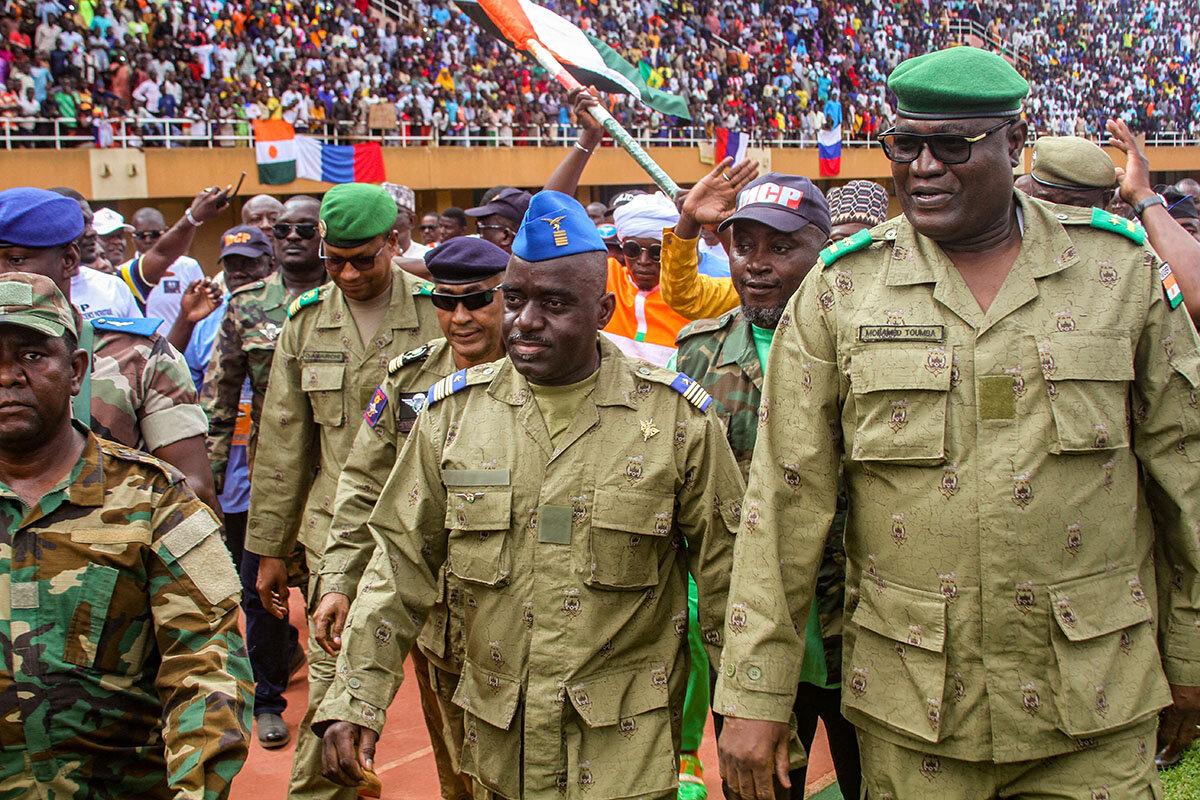
Fast forward to today, and that single tank has become a convoy stretching across a region the size of Western Europe. Mali, Burkina Faso, Niger, Guinea Bissau each has had a coup. Each has seen its junta leaders cheered in the streets. And now, the three most prominent of those juntas have done something nobody predicted: they walked out of ECOWAS entirely, formed their own bloc called the Alliance of Sahel States, and invited Russia in through the front door.
If you're reading this from Lagos, Accra, Abuja, or anywhere in the diaspora, you might be tempted to think this is someone else's problem. It isn't. Not even close.
First, What Actually Happened And Why It Kept Happening
The Sahel has been on fire for years. Not metaphorically. Jihadist groups linked to Al Qaeda and ISIS have been expanding across the region for over a decade, exploiting poverty, ethnic tensions, and the spectacular failure of governments to deliver basic security to rural communities.
When Mali's military overthrew President Ibrahim Boubacar Keïta in 2020, many ordinary Malians celebrated. Not because they loved soldiers in government, but because they had watched elected leaders grow rich while their villages burned. The coup in Burkina Faso in 2022 followed a similar script. Niger in 2023. Guinea Bissau in late 2025.
Between 2020 and 2026, eight African nations experienced military takeovers. Eleven successful interventions in total, according to recent governance research. That's not a coincidence. That's a pattern. And patterns have causes.
The causes, in brief: a decade of jihadist insurgency that elected governments could not contain, economies shaped more by foreign interests than local needs, and a deep public exhaustion with leaders who seemed more interested in staying in power than in governing.
Enter the Alliance of Sahel States And the ECOWAS Fracture
In September 2023, after ECOWAS threatened military intervention to reverse Niger's coup, something remarkable happened. Mali and Burkina Faso, already under junta rule themselves, said, “Touch Niger and you touch us.” They formed a mutual defence pact called the Alliance of Sahel States (AES). By January 2024, all three had formally withdrawn from ECOWAS.
Let that sink in. Three founding members of West Africa's most important regional institution, countries that helped build ECOWAS, walked out.
Since then, the AES has moved faster than anyone expected. By December 2025, the three leaders had met in Bamako for their second confederal summit, inaugurating a joint investment bank, a shared television channel, and a unified military force. They have launched their own biometric ID card, set to replace ECOWAS documents within five years. Russia's Wagner Group, now rebranded as the Africa Corps, operates across all three countries.
ECOWAS, meanwhile, is in crisis. Its sanctions on Niger drove up the cost of rice, cooking oil, and fuel by more than 50 percent, creating popular backlash not against the junta, but against ECOWAS itself. The bloc's credibility has never been lower.
Why This Is Not Just a Sahel Problem
Here is the part that does not get said loudly enough in African media: the instability is spreading south.
Guinea-Bissau's president was overthrown in November 2025. Benin, long held up as one of West Africa's model democracies, narrowly survived a coup attempt in December 2025. For the first time since the 1990s, the coup belt is reaching toward the Gulf of Guinea coast. Toward Nigeria's borders. Toward the heart of ECOWAS's institutional base.
ECOWAS has over 424 million people across 15 member states. Nigeria alone accounts for roughly a quarter of West Africa's GDP. If the instability that has consumed the Sahel begins to take root in coastal states in countries with functioning ports, stock exchanges, and diaspora investment, the economic ripple effects will be felt from Abuja to London to Calgary.
There is also the security dimension. The Sahel is now the deadliest region for terrorism on earth, responsible for nearly half of all global terrorism linked deaths in recent years. Niger's withdrawal from regional counterterrorism coordination has already created border security gaps along Nigeria's northern frontier. Criminal networks are filling the vacuum.
Russia, France, and the Geopolitical Chessboard
You cannot understand the Sahel crisis without talking about what is happening geopolitically.
France spent decades as the dominant external power in francophone West Africa, providing military bases, training security forces, and maintaining close economic ties through the CFA franc currency system. The junta has systematically dismantled all of it. French ambassadors were expelled. French troops were asked to leave. In March 2025, Burkina Faso, Mali, and Niger even withdrew from the Organisation Internationale de la Francophonie, the cultural diplomatic body that France had built partly in these countries.
Russia walked in where France walked out. Wagner and Africa Corps mercenaries now operate across all three AES countries. In December 2025, the United States, under the Trump administration, announced travel bans targeting the AES nations, citing terrorism risks and poor intelligence sharing. America has also lost access to its drone surveillance base in Niger, a major blow to counterterrorism intelligence across the region.
This is a full geopolitical realignment, playing out in real time, in Africa's most fragile zone. And the people bearing the cost of higher food prices, disrupted borders, and insecurity are ordinary West Africans.
What It Means for Pan-African Unity
Here is the uncomfortable question that nobody quite wants to ask: Is the AES actually a Pan-African project?
The junta says yes. They talk about African sovereignty, ending neocolonial dependency, and building regional infrastructure without Western conditions attached. At their new TV channel in Bamako, they have pitched themselves as the voice of the Sahel by Africans, for Africans. There is a genuine resonance to that message, especially among young people who have watched their governments deliver little while foreign companies extract uranium, gold, and oil.
But there is a harder truth here, too. Swapping French influence for Russian influence is not sovereignty. It is a different kind of dependency. The AES states have invited Wagner mercenaries to operate on their soil. There is no free press. Opposition leaders have been imprisoned. And the jihadist violence that supposedly justified the coups has, in most cases, gotten worse, not better.
Pan-Africanism at its best is about genuine self-determination, economic, political, and cultural. What is happening in the Sahel is more complicated and more contradictory than either its cheerleaders or its critics are willing to admit.
What to Watch in the Coming Months
Three things will shape how this unfolds:
- Whether ECOWAS can reform fast enough to remain relevant. Senegal's President Bassirou Diomaye Faye has been pushing for dialogue between ECOWAS and the AES states. If that bridge can be built, there is a path back from the brink. If not, West Africa's main regional institution risks becoming a rump bloc covering only its coastal states.
- Whether the AES can deliver anything economically. The juntas have promised development without Western strings. But landlocked countries under sanctions, dependent on smuggling corridors, with volatile security and no democratic legitimacy, are not a recipe for investment or growth. The new Sahel Investment and Development Bank is a start, but the test is whether it can attract real capital.
- Whether the coup contagion keeps spreading south. Benin survived its December 2025 attempt. But the structural conditions that have produced coups, weak governance, economic frustration, and security failure exist in coastal states too. Nigeria's 2027 election happens in this context. So does Ghana's political transition. Every election in coastal West Africa from now on will occur under the shadow of what is happening in the Sahel.
The Bottom Line
The Sahel is not a far-off crisis. It is a fault line running through the middle of African geopolitics and it is getting wider.
What started as a cluster of coups in landlocked French-speaking countries has become something much bigger: a challenge to ECOWAS's legitimacy, a reshaping of great power competition in Africa, and a test of whether Pan-African solidarity means anything when push comes to shove.
BreakingPoint News will be following every development in this story as it unfolds. Because the Sahel matters not just to the people who live there, but to every African who believes the continent deserves better than the choices currently on offer.

Leave a comment
Your email address will not be published. Required fields are marked *