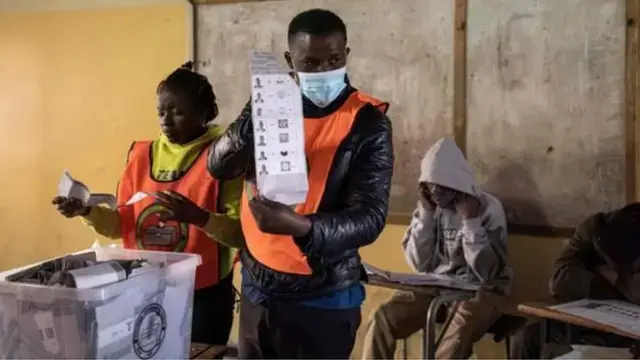
Zambians go to the polls on August 13 in a general election that has become a referendum on a familiar African political question: what happens when the macroeconomic numbers improve but ordinary life doesn't feel any easier?
President Hakainde Hichilema, 64, is seeking a second term at the head of the United Party for National Development (UPND). Fourteen candidates are on the ballot, but in practice this is a two-horse race between Hichilema and Brian Mundubile of the Tonse Alliance, a formation that emerged from the wreckage of the former ruling Patriotic Front. Mundubile, an MP from Mporokoso, secured the Tonse nomination in January, defeating Christian Democratic Party leader Danny Pule by 129 votes to 34.
Hichilema's case: stabilization delivered
The incumbent's pitch is continuity, and on paper he has numbers to point to. Government figures put inflation at 6.5% in June 2026, down from 24% when he took office in August 2021. Mining has seen a reported $12 billion in new investment, the exchange rate has stabilized, and foreign exchange reserves have climbed to $6.5 billion. His platform includes free primary and secondary education, an expanded Constituency Development Fund, and ambitious production targets — 10 million metric tonnes of maize and 3 million tonnes of copper. He has also promised two million jobs, expanded trade school enrolment, and a doubling of the economy if returned.
Incumbency gives him the rest: state resources, national visibility, and the ability to campaign in every district. The UPND message is straightforward — protect the gains since 2021 and don't risk a return to the past.
Mundubile's case: the numbers don't feed anyone
The opposition's counterargument is that macroeconomic recovery hasn't reached households. Mundubile has dismissed the government's economic messaging as "big English" while people go hungry, and has promised to draw on the country's reserves to address immediate economic pressures once elected — a pledge that energized supporters and drew sharp criticism from economists.
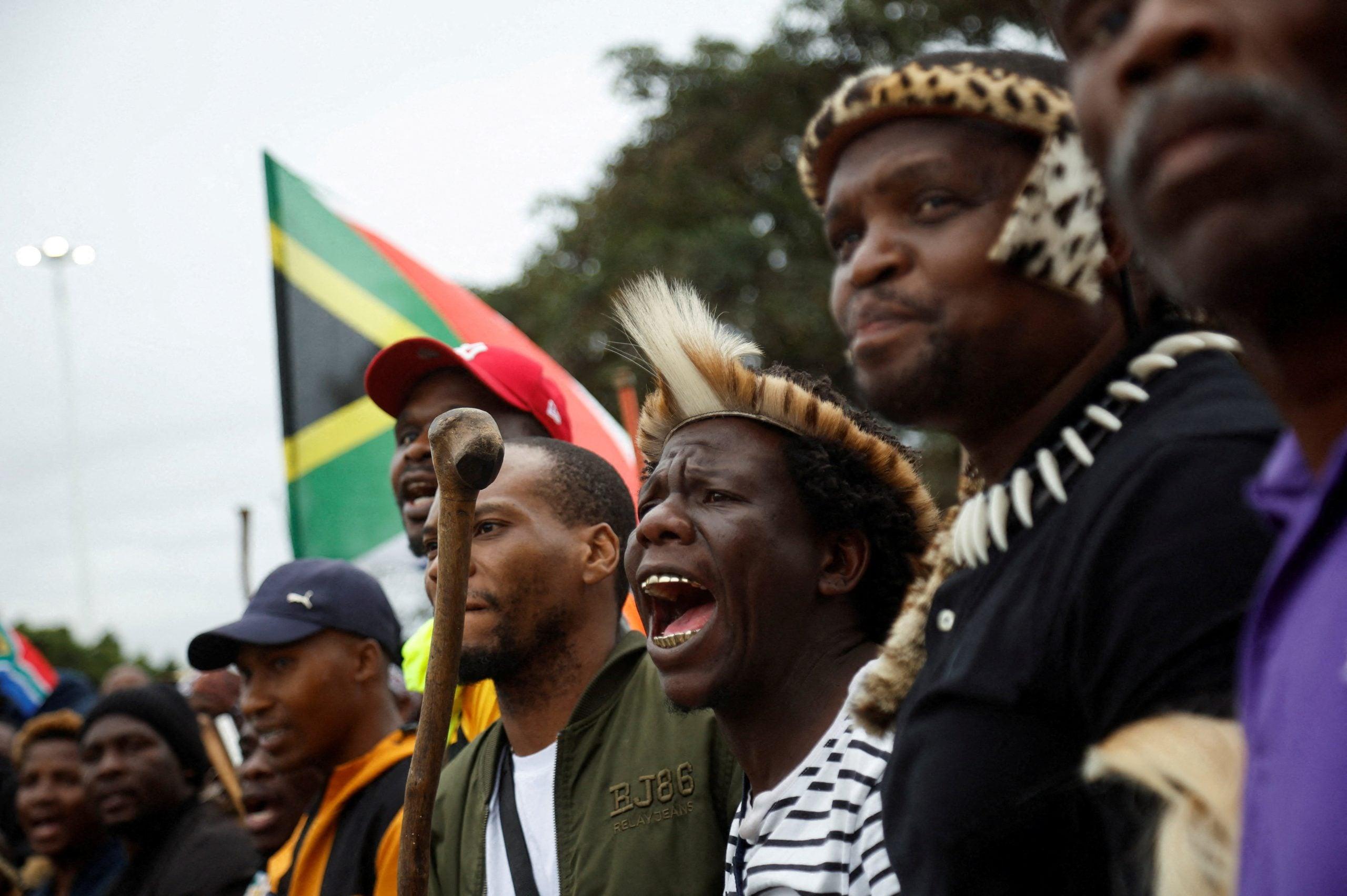
Voter frustration over the cost of living is the campaign's central fault line, alongside lingering anger over the contentious burial of former president Edgar Lungu. On July 5, Mundubile and running mate Makebi Zulu held a heavily attended "mega rally" in Kasama, targeting the Northern Province, and clashes between Tonse mobilizers and UPND supporters in Lundazi have shown how heated the contest has become.
Why most analysts still expect Hichilema to win
Rallies don't automatically translate into the 50%+1 needed to avoid a runoff, and the opposition's structural problems run deep. The main opposition has failed to field candidates in nearly a third of parliamentary seats, and the ruling party already holds 15 seats won unopposed. Analysts and investors broadly expect Hichilema to win against what is widely described as a fragmented opposition.
There are complicating signs for the ruling party, though. Around 184 independent candidates are on the ballot — many of them former UPND members who lost party primaries but retain strong local followings — compared with 226 UPND candidates. That's a substantial signal of internal dissatisfaction with candidate selection, and in Western Province Hichilema has reportedly had to urge voters to back UPND candidates he acknowledged were unpopular.
The scrutiny Hichilema is facing
Not all the criticism is electoral. Critics have accused the president of tilting the field, pointing to state involvement in the Patriotic Front's leadership disputes — including the Registrar of Societies recognizing a rival PF faction leader who subsequently pledged to back Hichilema — and to concerns about press freedom and the use of police powers against opposition gatherings. Those disputes have moved through Zambia's courts, with a Kabwe High Court injunction restricting one PF faction's operations.
Zambia's counterweight to those concerns is its own track record: the country has a history of peaceful elections and has managed three peaceful transfers of power through the ballot box, a record few of its neighbours can match.
What to watch
This election runs under a recent constitutional amendment that expanded parliament from 156 to 226 constituencies and created 40 reserved seats for women, youth, and persons with disabilities. That means the story on August 14 may not just be who wins the presidency, but how dominant the UPND becomes in the legislature — and what a party with that kind of parliamentary control chooses to do with it.
For the diaspora watching from abroad, Zambia is a useful test case: a country that did the painful debt restructuring, stabilized its currency, brought inflation down from 24% to single digits, and is now finding out whether voters reward that at the ballot box, or punish the government for how long the recovery is taking to reach their kitchens.

Leave a comment
Your email address will not be published. Required fields are marked *