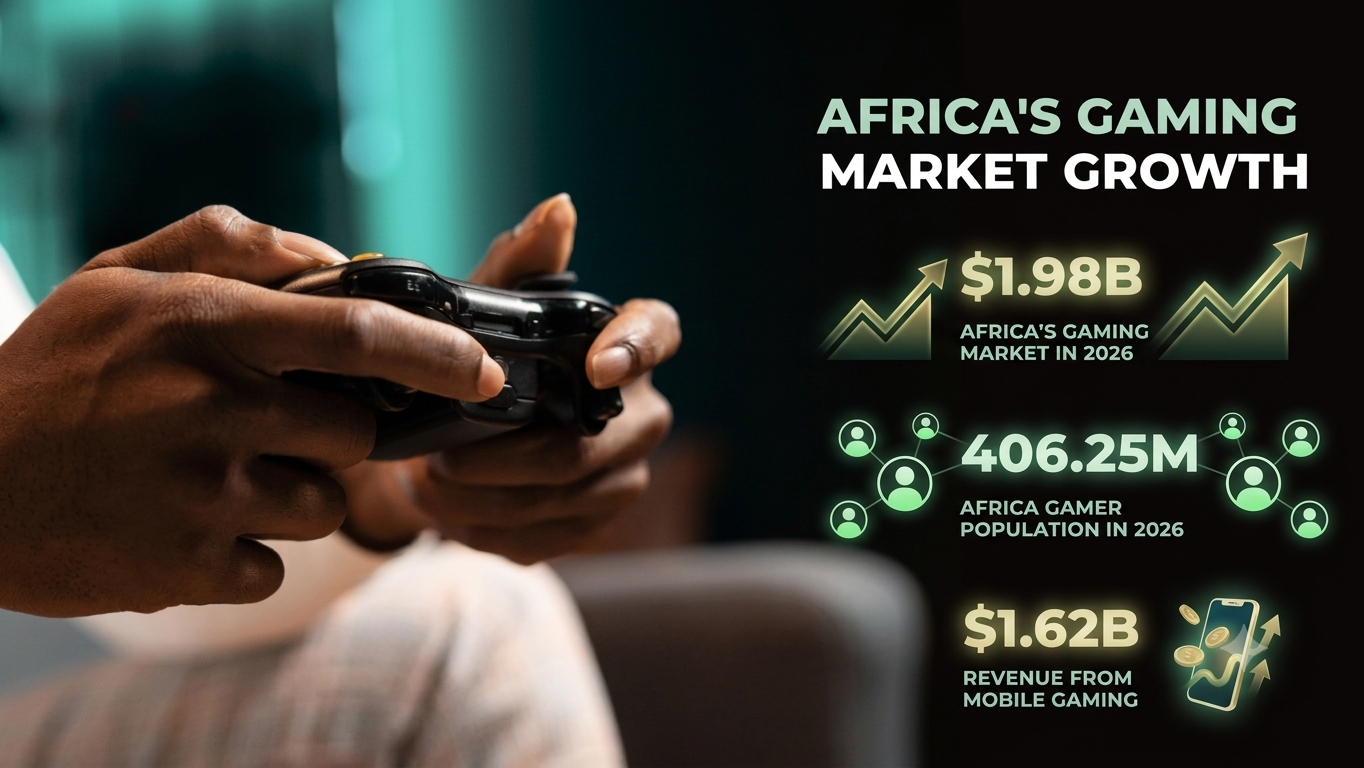
According to data from Carry1st and Newzoo, Africa is expected to have more than 406 million gamers this year, up from about 370 million in 2025. The market is also growing faster than the global gaming industry.
The numbers point to a bigger transformation: Africa is not simply producing more gamers. An ecosystem of developers, publishers, esports organisations, payment companies, device manufacturers and other businesses is forming around them.
Africa Now Has More Than 400 Million Gamers
The estimated 406.25 million gamers expected in Africa in 2026 represent a substantial increase from 369.66 million in 2025.
That means approximately 36.6 million additional players could enter the African gaming ecosystem in a single year.
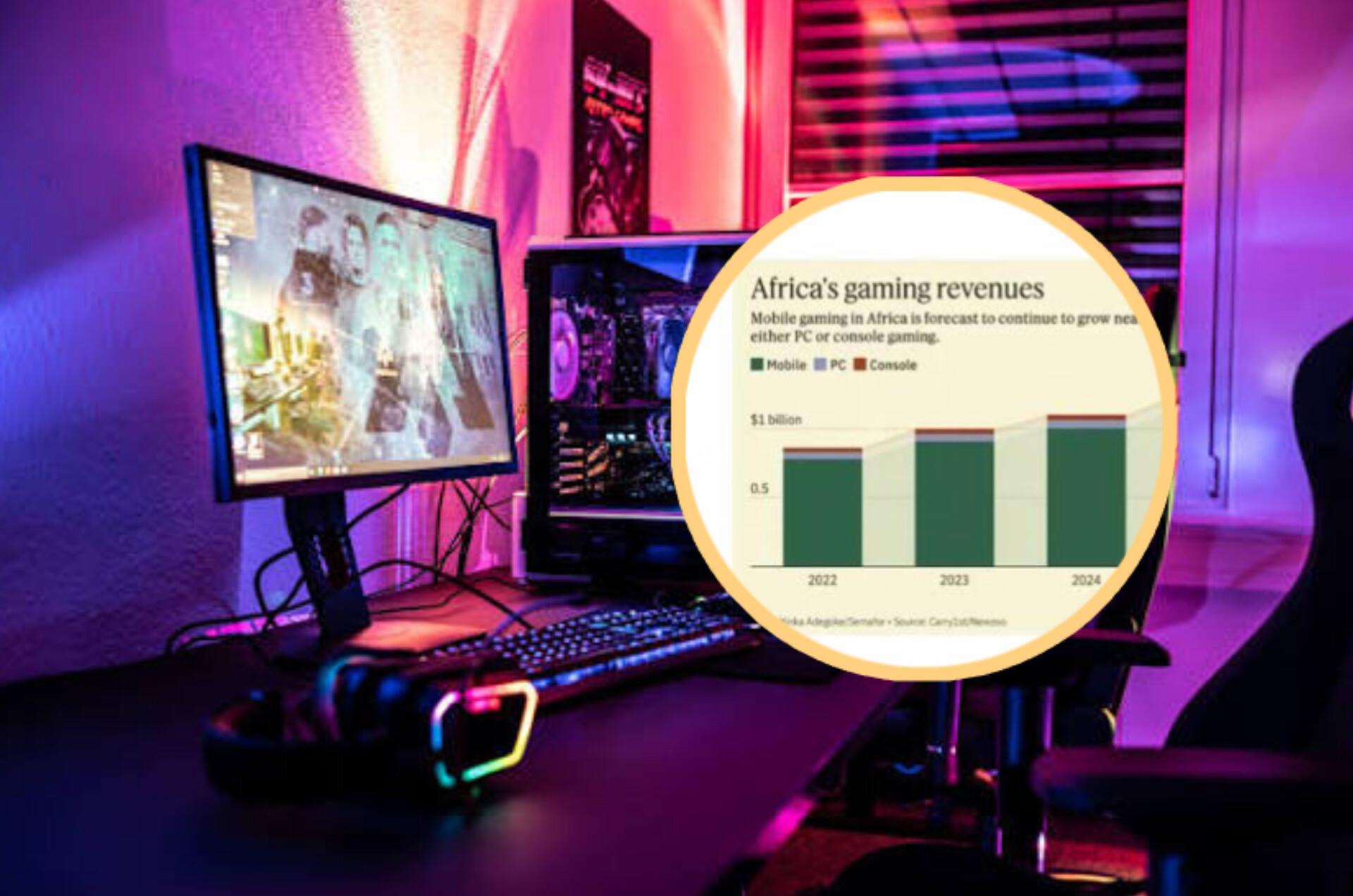
The growth is particularly significant because gaming is becoming increasingly accessible through smartphones.
Mobile gaming is forecast to generate $1.62 billion in revenue in Africa in 2026, accounting for about 81.8% of the continent's total gaming revenue.
For Africa, this matters because consumers do not need expensive gaming computers or consoles to participate.
A smartphone and an internet connection can be enough to enter the market.
Nigeria is one of the major gaming markets
Nigeria is playing an important role in Africa's gaming expansion.
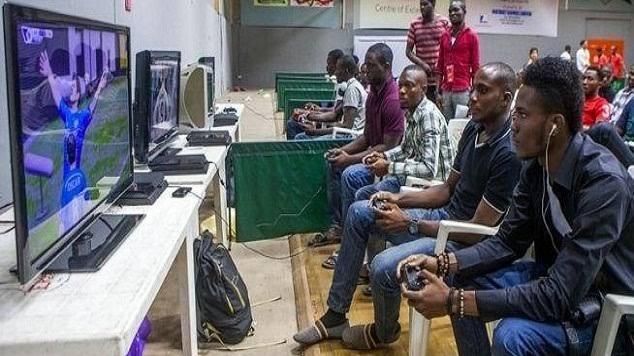
The country has a huge young population, widespread smartphone usage and a growing community of game developers and gaming communities.
The 2026 Carry1st-Newzoo figures put Nigeria's gaming revenue forecast at approximately $226.6 million, behind Egypt and South Africa among the largest African markets.
Nigeria is also becoming more visible internationally.
In August, the country participated at Gamescom in Germany with its first national pavilion, bringing together Nigerian studios, developers and publishers under the “Games from Nigeria” banner.
That appearance highlights a broader shift: Nigerian gaming companies are increasingly looking beyond local consumers and attempting to build intellectual property that can compete internationally.
Egypt and South Africa are also major players
Egypt is currently forecast to generate the largest gaming revenue among African markets in 2026, at approximately $458.1 million.
South Africa follows with about $263 million, while Nigeria is projected at approximately $226.6 million.
South Africa is particularly important for game development.
Sensor Tower's 2026 research describes South Africa as the dominant force in African PC and console game development, with the country's studios accounting for a large share of top-selling African-developed titles.
This creates an interesting contrast across the continent.
While smartphones are driving much of Africa's consumer gaming market, South Africa has developed a stronger presence in PC and console development.
The money is moving beyond the games
Perhaps the biggest development is that companies are beginning to recognise that gaming is an ecosystem rather than simply a product.
A successful game can create opportunities for developers, publishers, payment providers, esports organisers, broadcasters, advertisers, smartphone manufacturers and other businesses.
Africa's growing esports scene is helping accelerate this development.
Competitions such as the Carry1st Africa Cup and the PUBG Mobile Africa Esports Championship are creating more structured opportunities for players and teams.
Device companies are also paying attention.
Infinix, for example, has partnered with the PUBG Mobile Africa Esports Championship as an official gaming-phone partner, connecting its hardware business with the continent's growing gaming audience.
But Africa Still Has A Major Problem: Monetisation
Having hundreds of millions of gamers does not automatically mean African game developers will make hundreds of millions of dollars.
Payment infrastructure remains one of the industry's challenges.
A 2026 report supported by Xsolla highlighted persistent problems including payment friction, limited funding, uneven infrastructure and the absence of a unified continental market.
This is important because Africa is not one single market.
A developer trying to sell a game across Nigeria, Kenya, Egypt, South Africa and Morocco may encounter different payment systems, currencies, regulations, consumer behaviours and infrastructure.
Solving those problems could be just as important as creating the next successful African game.
A $4 billion future?
The industry's growth may only be beginning.
Mordor Intelligence estimates that Africa's gaming market could grow from approximately $2.29 billion in 2026 to $4.10 billion by 2031, representing a 12.32% compound annual growth rate.
Another industry analysis similarly points toward a market approaching $4 billion by 2031.
The projections should be treated as forecasts rather than guaranteed outcomes, but they demonstrate the scale of expectations surrounding African gaming.
Africa Already Has The Most Important Ingredient For A Major Gaming Industry: Players.
The next challenge is turning that enormous audience into a sustainable ecosystem where African developers can create games, African companies can monetise them and local talent can build globally recognised intellectual property.
The opportunity is no longer simply about Africans playing games made elsewhere.
It is increasingly about Africans building the games, companies and businesses behind the industry.
And with more than 400 million gamers expected across the continent in 2026, Africa's gaming story may be moving from an emerging trend to a serious billion-dollar industry.

Leave a comment
Your email address will not be published. Required fields are marked *