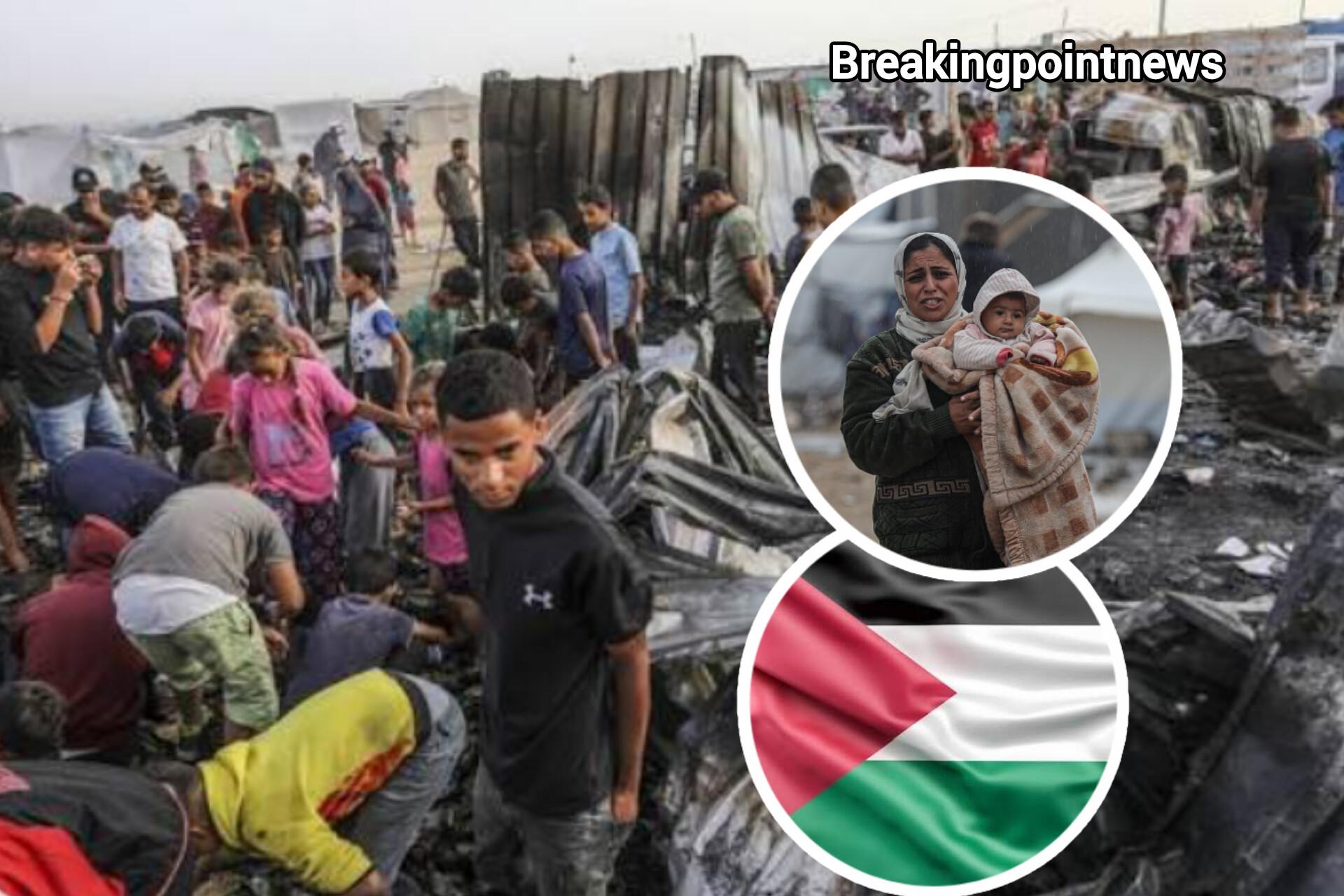
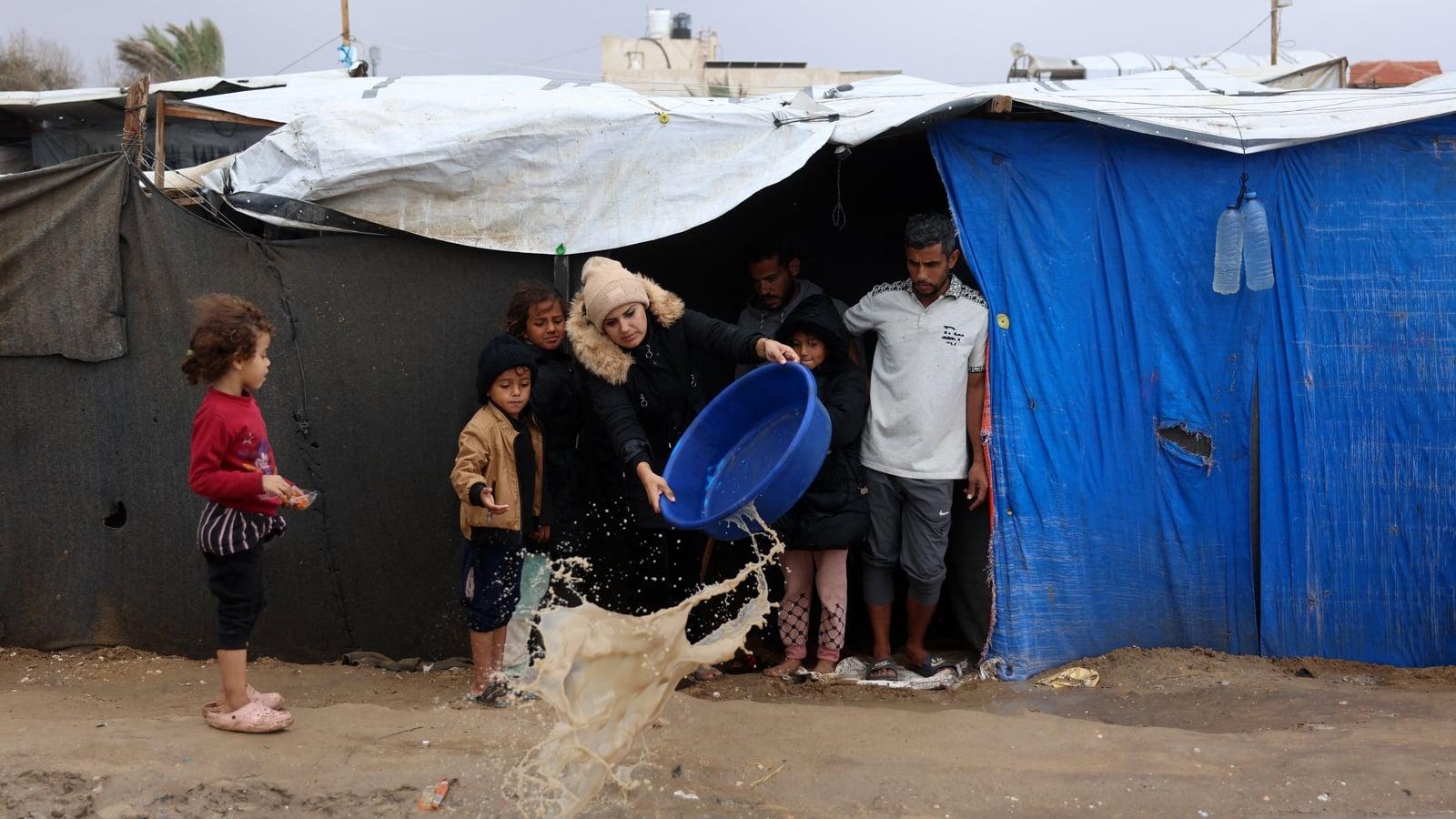
Heavy rain on Saturday flooded tens of thousands of displaced people's tents in war-devastated Gaza, Palestinian authorities said, leaving them without shelter.
In a statement, the Hamas-run government media office said about "70,000 tents sheltering tens of thousands of displaced people were flooded on the first day" of rains. It also noted the "collapse of dozens of cracked walls and roofs, which caused injuries," some critical, across the territory .
Since early Saturday, hundreds of displaced families have been seen fleeing camps in parts of Gaza City and in the central and northern areas of the Strip after they were inundated by rainwater.
A civil defence stretched to breaking point
Civil defence spokesman Mahmoud Bassal told AFP his teams had received more than 1,500 calls during the night from residents requesting urgent assistance after their tents were flooded, explaining that the agency "is operating without any equipment or capabilities." "We have issued an urgent distress call to the international community and humanitarian organisations to intervene immediately to save hundreds of thousands of displaced people from the flooding of their tents," he said. "We cannot face the consequences of this storm on our own" .
Municipal and civil defence officials said they were unable to cope because of fuel shortages and damage to equipment. They said Israel had destroyed hundreds of vehicles, including bulldozers and others used to pump water, during the war, and has since barred entry of construction equipment during the ceasefire .
“Our suffering is repeated every winter”
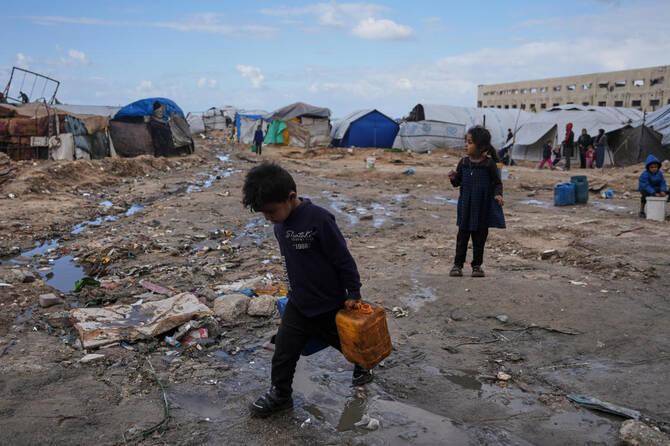
Um Muhammad al-Hersh, 45, who lives with her family in a tent in western Gaza, told AFP: "We were not able to save the mattresses, and all the clothes were soaked. Our suffering is repeated every winter" .
Maryam Odeh, 34, who lives with her children in Deir al-Balah, said: "We no longer know how to protect our children. My children ask me where we will sleep tonight, and I have no answer." Khaled al-Najjar, 41, added: "We fear for our children not only from the flooding of the tents, but also from the cold and the widespread diseases" .
One resident, Olfat Magdoub, tried in vain to sweep water away from her tent. "This is the first day of rain, and of course we are already flooded. What will happen if it rains again the next day? This is only the first day and we're already overwhelmed," she said .
The shelter crisis
A coalition of Palestinian civil society organisations warned of "the catastrophe that has come to threaten the lives of hundreds of thousands of residents," pointing to the risk of disease and epidemics. The coalition called for "pressure on Israel to allow the entry of humanitarian aid without restrictions" .
Mustafa Qazzaat, a member of the Gaza City council and an official in the Strip's emergency committee, said Israel has not allowed prefabricated homes to shelter the displaced since the truce was announced, permitting only limited numbers of tents. He told AFP that Gaza "needs 200,000 prefabricated homes urgently, in addition to the entry of heavy machinery to remove the rubble of destroyed homes and buildings, open main roads, and urgently provide electricity and heating" .
A fragile ceasefire came into effect on 10 October 2025, after two years of war. Despite the agreement, mediated by Egypt, Qatar and the United States, the Israeli army continues airstrikes and ground operations on an almost daily basis .

Leave a comment
Your email address will not be published. Required fields are marked *